
Your cart (0)
Your cart is empty
Tax included and shipping calculated at checkout
Your cart is empty
Tax included and shipping calculated at checkout

Last Updated: October 4, 2026
Improving e-bike handling on technical trails starts with how you use the motor, not how hard you pedal. Smooth power delivery keeps the front wheel down and the rear tyre hooked up.
A modern e-MTB makes serious torque. Dump all of it into a loose, rocky pinch and the rear tyre spins and the front lifts. Riders who clean technical climbs run lower assist and meter it carefully.
Most systems offer Eco, Trail and Boost-style modes. On technical climbs, Trail is usually the sweet spot, enough support to keep momentum without spinning the rear wheel.
Save Boost for open fire roads where traction is good; on rooty, off-camber climbs it's often too much.
Run one assist level lower than you think you need, pedal smoothly, shift early so you're never grinding a big gear, and keep a steady cadence.
Some e-MTB systems include traction control or adaptive power delivery, cutting motor output when they sense wheelspin, handy on wet roots and loose over hard.
If your bike has it, use it on techy climbs. If it doesn't, your right foot is the traction control. Ease the power in rather than slamming it on.
For Avinox-equipped bikes, the tuning options let you adjust how aggressively the motor responds. That's worth exploring before you blame the trail.
Suspension setup on an e-MTB differs from an analogue bike, the extra mass changes spring rate, damping and how the bike sits in its travel.
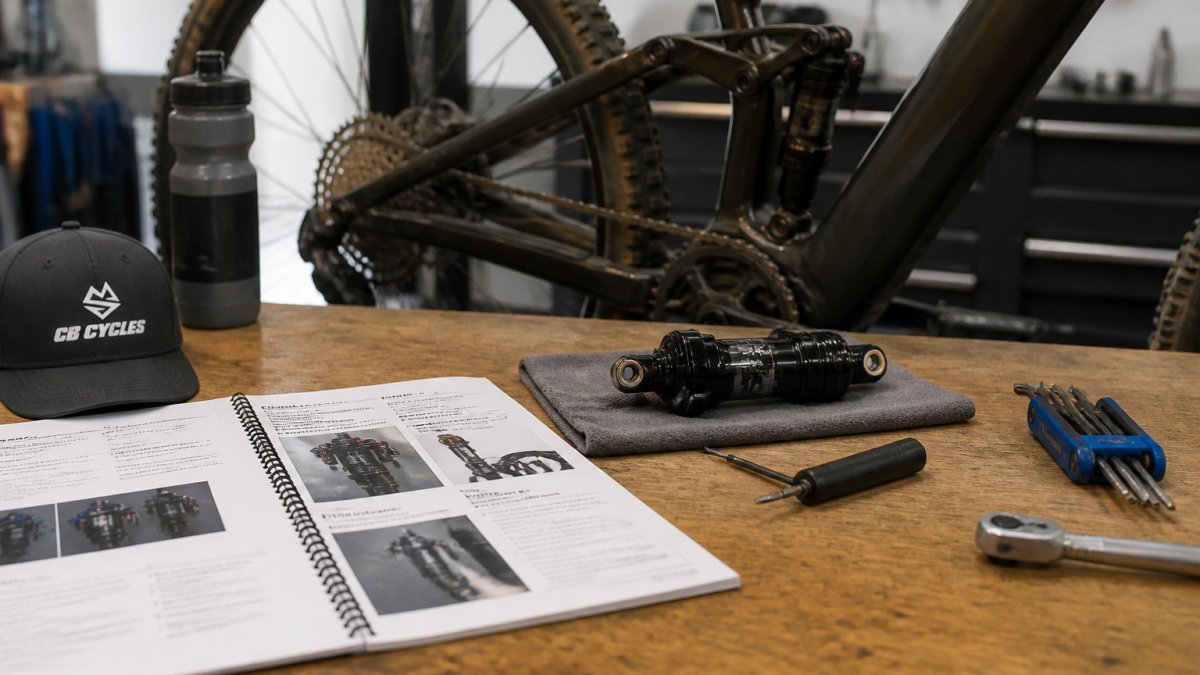
Start with sag. E-MTBs are heavier, so you'll usually need more spring pressure or a stiffer coil to hit the same sag percentage. Check your manufacturer's recommendation for your model, because it varies.
Rebound damping controls how fast the suspension extends after a hit.
On a heavier chassis, run rebound a touch slower than on a lighter bike, the extra weight needs more control on the return stroke.
Compression settings manage bigger impacts and cornering support. More low-speed compression helps hold the bike up in berms and G-outs when you're carrying extra kilos.
Don't chase someone else's settings. Rider weight, terrain, and riding style all change what works.
REVERB AXS DROPPER POST B2 - 31.6 →
A dropper post helps here too, getting your weight low and back is easier with the saddle out of the way, and a wireless post like the REVERB AXS dropper post removes cable routing hassle on e-MTB frames.

Cornering a heavy e-bike on technical trails comes down to three things: braking earlier, weighting the outside pedal, and looking through the turn. The extra mass means you can't leave everything as late as on a lighter bike.
Braking modulation matters more than raw power. Grab a fistful of front brake mid-corner and the bike stands up and pushes wide, brake before the turn, then ease off as you lean in.
Keep your centre of gravity low and centred: off the saddle, elbows out, weight balanced between the wheels.
Through the turn: weight the outside pedal, look at the exit rather than the front tyre, lean the bike rather than just your body, and stay off the brakes once committed.
Heavy bikes carry momentum well, so use it. Pick a line that keeps you rolling rather than one that requires a hard stop and restart.
On tight switchbacks, set up wide, brake early and let the bike roll through. Pumping the terrain instead of pedalling keeps the chassis settled and holds speed without upsetting traction.
Tyre pressure matters for heavier riders and bikes.
Small cockpit changes make a real difference on a heavy bike. A shorter stem and wider bar give you more leverage, and a thin, tacky grip like the Burgtec Bartender lock-on grips improves trail feedback and reduces hand fatigue on rough descents.

If your dropper lever needs less thumb effort for technical terrain, the OneUp Dropper Remote is a simple upgrade.

Heavy e-MTBs reward setup and technique more than brute force. If your bike feels nervous, vague, or hard to hold on technical trails, the fix is often suspension setup, cockpit adjustment, and a few riding habits rather than a new bike.
At CB Cycles, we help riders across Australind, Bunbury and the South West get their e-MTBs dialled in. We service bikes regardless of where you bought them, and we stock Avinox spare parts for riders running that system.
More weight means more momentum, so an e-MTB accelerates downhill faster and takes longer to slow or change direction. It also raises your centre of gravity, which makes body position and weight distribution matter more than on a lighter bike. Heavier chassis flex less, which helps stability, but braking distances stretch and tyre pressure needs to be dialled in for grip. Riders often find an e-bike feels planted on rough ground yet sluggish in tight switchbacks until they adjust their technique.
There is no single number. A heavier chassis needs more support than a regular mountain bike, but too much pressure costs traction on roots and loose rock. Start a few psi higher than you would on a comparable analogue bike, then work down in small steps until the tyre feels supportive in corners without squirming or burping. Tubeless setups and inserts give you more room to experiment. Conditions, casing and rim width all change the answer, so test on the trails you actually ride.
Yes. A workshop can set sag, rebound and compression to suit your weight, riding style and the terrain you ride most. Sag is the starting point, because it affects geometry, pedal strike risk and how the bike sits under braking. From there, rebound and compression tuning change how the bike tracks through roots and rocks. Bring your usual gear and ride data if you have it, and ask for settings you can adjust yourself on the trail.